Sunday, February 10, 2019

Free From Stress...


From our Facebook page... We enjoy boating with Savannah's Freedom Boat Club, and we wrote about that here...

Image may contain: one or more people, sky, outdoor and water

I had the pleasure of taking a brand-new boat on Savannah's beautiful rivers yesterday. I think she had just a couple of hours on her, and what a pleasure she was to run. I kept wondering why the stereo sounded so much better, and then I looked up. Speakers in the hard-top! Rockin' the blue tooth!

Image may contain: cloud, sky and outdoor

As you can see, Leo and Chance loved the ride. We saw dolphins and they wanted to make friends!

Image may contain: dog, sky, outdoor, nature and water


The way this came to pass is that Tommy Thomas McCarthy offered me a great deal on a FREEDOM BOAT CLUB membership. I had kept a Sea Ray at Hogan's Marina for 12 years. My storage bill had risen to $270 per month. That's just storage, not maintenance. Every time I wanted to go on my boat for 12 years I had to wash it twice. Once before going into the water and again on removing it. It was fun but a LOT of work. Tommy took my 1996 boat in trade for the initiation fee AND my first whole year's membership. He came and got it at Hogan's on his trailer and took care of everything. You know what they say about the two happiest days in a boat owner's life? It's TRUE!

Image may contain: sky, ocean, cloud, outdoor and water

I have been a member - and loved the relationship - for more than a year now, and I still save about $80 dollars a month. I show up and climb onto a boat that is spotless and fueled up. Ready to go. The boats are in great shape as Tommy maintains them and changes them out every couple of years. Tommy has earned awards for his customer service and has been voted the best many times. His dock hands are capable and polite and every experience is great. When I return to the dock, we get off and walk away. And we smile every time.

Image may contain: sky, tree, outdoor, nature and water

Some folks prefer high tides, floating upon which you can see across the great expanses of spartina alternaflora or "marsh grass." The vistas ARE beautiful and special to our coastal estuarine environment. But at low tide you get to see things that you won't later, such as these wading birds standing and waiting for dinner to swim by. Behind sugar cane, the marsh is the most life-producing place on earth, and it serves as the nursery for all the seafood we enjoy. Did you know that shrimp are spawned in the open ocean and drift "planktonically" into the marsh areas? It's a good thing, as baby shrimp cannot live in full-strength salt water. The brackish mix of fresh and salt is vital to much that we hold dear. — at Intercoastal Waterway.

I know some people feel that they need to own their own boat. I felt that way too for a long time. Then one day I thought about my 30 years of flying helicopters. I never owned one of them, I just showed up to do a job and was issued the equipment to get the job done. My FBC membership is very similar, except now the mission is to have fun without being stressed out. No yard trophy. No storage bill. No boat ramp follies. No problems, just pleasure...


Image may contain: sky and outdoor

Tommy and I talked about all the new boats coming for the season. His fleet is growing to 30 plus. This is a great way to get out on the water. If you would like to see what I am talking about, message me and I will take you out for a day on the water. It's beautiful here, you will love the views.

Friday, January 18, 2019

A Great Day on the water is unforgettable...

Is there any better way to enjoy Savannah than by boat?
Nope.


We have unspoiled islands with no bridges. Empty beaches to dig your toes into. Countless journeys through creek and marsh. Wide open spaces and hidden shortcuts. Vistas to behold!


And we love to share the joy.

If you are interested in learning more about Savannah's waters or boating in general, or just want to share a ride with your friends, contact foulds.daniel@gmail.com.

Happy Boating!

Thursday, August 9, 2018

So, Exactly Why Do I Have to Have a Sound Signal on my Pleasure Boat?

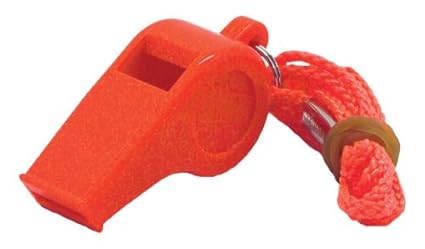
Image result for boat whistle


If you climb aboard most any small boat you will see a whistle attached to the keychain, or a horn stowed within reach of the wheel or tiller. And of course, you may have a horn installed by the manufacturer. Many of us know we have to have that gadget on board, but some of us aren't really aware why it must be there.

As I wrote in a previous post, sound signals are "required" to be used when navigating near other vessels - meeting, crossing or overtaking and within 1/2 mile. Inland rules say that we should signal intent, and the other vessel should answer with the same signal if in agreement or give the danger/doubt signal (4 to 6 short blasts) if in disagreement
In 29 years of boating on Savannah's waterways, I have never heard this occur. If you blow a whistle at a boat in Turner's creek they will probably wave or flip you off.  Inland rules also allow a radio exchange instead of sound signals when operating near other vessels, and I have occasionally heard this occur between vessels headed up and down the Atlantic Intercoastal Waterway (the ICW). Many small boats don't even have a marine VHF in operation... Ships in the river don't talk on channel 16.

But there IS a time when that whistle could prove to be very important to you. Imagine that in the spring or fall you elect to run over to Daufuskie Island for the afternoon, or out the sound to one of the barrier islands. When it's time to return to Savannah you discover that a big temperature differential between air temperature and sea temperature has created fog - often advection fog in the Savannah area. You need to get home, but you can't see much.

Can you legally proceed? Yes, within limits. You must slow down! You must listen for an approaching vessel forward of your beam - and the idiot coming up behind you blind and fast. And of course, you must be on the lookout even though you can't see much. That whistle hanging on your keychain? This is when you are going to blow that whistle - a "prolonged blast" of about five seconds - HARD - every two minutes. This is when you are underway and making way. (making wake). If you stop and are not tied to a dock or anchored, you are still underway but not making way. Now you offer up two prolonged blasts every two minutes.

"Hey, I am out here and not moving!"

Now, don't stop in the Savannah River in fog, because if a ship happens to be coming up or down the river, they may not hear your whistle and probably can't stop or turn if they did. Ships in the river in fog WILL be blowing big horns and/or sounding bells. Listen for them.

You can proceed at a slow speed, say five or seven knots, eyes and ears open, making your sound signals with your whistle or horn, and keeping up with your progress on your GPS. (You do have a GPS if moving in fog, right?) If you do happen to have a radio, this also might be a good time to self-announce your position and intentions on it. Be brief and to the point on channel 16.

And don't forget to turn on your lights...

Here is the Coast Guard's set of rules on their site...

Monday, July 30, 2018

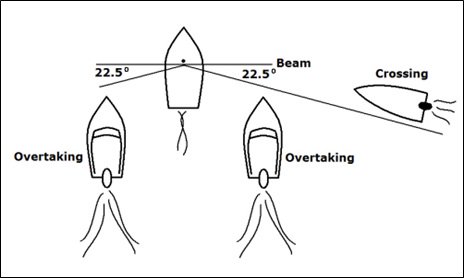
When does Overtaking become Crossing, and what does that mean to you in your boat?

Image result for vessel overtaking or crossing
A picture is worth a thousand words...

If you are overtaking, you are the give-way vessel. Always. Even if you are under sail.  If you are crossing, and are to another vessel's "right," you are the stand-on vessel. (The term "right-of-way is not used)  If the crossing vessel was on the opposite side in the picture above, he would be the give-way vessel.

It's important for a novice boater to understand basic concepts, such as "stand-on vessel," "give-way vessel," and "overtaking" versus "crossing" vessels. When I am forced to organize my thoughts to coherently explain something to someone else, it increases my personal level of understanding and helps me better apply what I know to the real world.

Next time you are on a boat, explain crossing, overtaking, and meeting head-on to someone along for the ride with you. Boating is archaic, with archaic terminology such as "abaft the beam." These terms need explaining. The act of doing this will benefit you and your listener.

Image courtesy Ace Boater training


If you are approaching another vessel at night and are in a position to see her red side-light, it means that you are the give-way vessel and must pass behind her. 

You should alter course and speed to avoid crossing in front of that vessel unless your paths will keep you more than a half-mile apart. 

If, on the other hand, you see a green side-light shining at you from another vessel's right (starboard) side, you are the stand-on vessel. The plan is for you to maintain course and speed in your vessel.

Be prepared for the other boater to not understand the navigation rules and not behave correctly.

That captain may not see you, he or she may be drunk or drugged, or maybe it's a case of "just plain dumb."

On Monday last, I was training two FBC members on a 28-foot twin. As we idled through the Thunderbolt no-wake zone another small boat approached us head-on. We altered course to the right and he turned in our direction. The captain had a group on board and was showing them the condos on the bank. No one on that boat was watching where they were going, and when he finally saw us, at about 50 feet, he was visibly startled. He waved at us sheepishly as he passed. 

Don't be that guy. Don't get startled or worse. Even though almost no one uses sound signals when meeting other vessels, we should have. A one-second blast of my horn or whistle would have been my signal of intention to alter course to the right. And it would have alerted him to our presence.

As the stand-on vessel in a world full of know-nothing boaters, you may have to alter course or reduce speed to prevent a collision. There's a collision-regulation (COLREG) for that too. It says don't crash. If it's chaos on the water and there are boats in all directions, slow down. If there is going to be a collision, watch it from a distance.

Okay, so what happens when you are right on or very close to that 22.5-degree line abaft the other vessel's right beam (side). Are you now overtaking and responsible to alter course and speed to give way? Or are you in a crossing situation and the "stand-on" vessel?

The most conservative response rule works here. If not sure whether you are the give-way vessel or the stand-on vessel, be safe and give way by reducing speed and/or changing your heading to avoid colliding.

How many times you have ever heard a small vessel give or return a sound signal on the water, as required by inland nav rules. That's one of the reasons you need a sound signaling device on hand, such as a whistle. 


When Fog Forms...

 This is the time of year when fog forms on the waters. Any significant difference between air and water temps makes fog likely.  So let...