Saturday, January 11, 2020

For The Love Of A Marina

This article originally appeared in the November 2019 issue of Southern Tides Magazine


"Players with Short Bats, Please Step Up Close to the Plate"


I 've always loved marinas.  Each is unique - with its own quirks, forgivable weaknesses, and heartwarming strengths. Marinas are terraqueous places consisting of both land and water, where pleasure begins and ends and memories are made to last.

Like airports, marinas are jumping-off points between two worlds. They are checkpoints on our journey through life; natural gathering-spots where we team-up and set out on adventure - or return from it full of stories that bond family and friend alike.  Re-creation begins at a marina.

During the return from a trip south on the ICW long ago, Jeanne and I stopped at the marina on Jekyll Island as an October evening set in and the sky lost its light. The boss-lady came down to the dock and greeted us with a smile.
“Can we stay on our boat at your dock tonight?” "Yes!"
I think we paid a dollar a foot, so for 22 dollars we were ushered to an inside slip with our bow pointed towards the channel and any wakes from passersby. The lady was so friendly that I will never forget her. “Our restaurant is open now, and tonight we have live music. There are bikes that you can use if you want to go for a ride. If you need to go to the store we have an old van.” She made our stay special. We had a great dinner, enjoyed the show, and walked down to our little floating-bedroom for a good night’s sleep. Water lapping at the hull makes a sweet lullaby. What a great marina! I want to go back!

Image courtesy Jekyll Harbor Marina. I have stayed there and it's great.

When I first came to Savannah thirty years ago as an Army pilot, I lived on the Southside. Our favorite marina in those days was at Savannah’s version of Cape Finisterre - at the far end of Coffee Bluff Road. The old Coffee Bluff Marina - replaced now by a much finer city-funded endeavor - was a ramshackle affair with on-trailer storage barns, an old tractor for pulling boats to the hoist, docks for tenants and visitors, and a store with most of what you might need on the water.

The new Coffee Bluff Marina bears little resemblance to the old, but it's very nice and attractive.
Take note: The store does not sell beer. Photo by Daniel Foulds  

Long ago, I was part of a group of boating families that left Hunter Army Airfield’s dock at Lott’s Island headed for Ossabaw Island's beaches. We ran into a pop-up summer-thunderstorm near Coffee Bluff Marina. In line with “any port in a storm” we tied up to the docks and took shelter in the store, and that’s how I got to know Mr. Freddie. He was the man who ran the show. Freddie was a wonderful combination of behavior-traits. On the surface, he was a curmudgeon. As soon as he determined he wasn’t dealing with a fool or a know-it-all, he warmed right up and became as helpful as anyone could wish.

Freddie and I shared jokes and stories often over the years. He never let go of the day that I attempted to scud-run a Chinook up the river at low-level trying to reach the airfield. The weather was terrible, with low clouds, fog and rain, and no visibility to speak of. We crept upriver at fifty feet, marker by marker. We reached the marina at – maybe – a hundred feet up. On top of the store we ran into a solid wall of “I can’t see anything, can you?” (story continues below)

Want you car or truck to last forever? Take care of your vehicle and it will take
care of you!
 Get superior service while supporting a locally-owned
family-business. Call Mike Thompson at 912 355-6312. They've been in business
for over 20 years and they are an asset to our community!


We stopped and performed a pedal-turn, pivoting directly over Freddie’s head. Freddie certainly knew we were there. Heck, he may have been outside shaking his fist at us.
We snuck back out the river and up the coast and ended up landing at the Tybee Lighthouse helipad.

Under construction now, this new marina on the Bull River will offer all services and
easy access to Savannah's greatest treasure, her maritime environment. Expected completion
in early 2021. For more info call 912 507-2225


When next I saw Freddie I asked, “Did we do any damage?”  He smiled and laughed and said, “Nothing I can’t handle.” That was Freddie. He was a great American and I miss him.

The Lee Shore Marina on Wilmington Island is a favorite of sailboaters. And Cheers is right there!
Photo by Daniel Foulds

For the last fourteen years, my marina has been Hogans on Wilmington Island. I had the Sea Ray there for twelve of them and now I captain a tour-boat from their dock. The crew there are wonderful. The boss – Bubba Strickland - can best be described as a community-treasure. Like Freddie before him, he’s got a hard shell and a soft heart. He stands on “the quarterdeck” on a summer day and barks orders to his young charges like a drill sergeant. His kids learn much about life and being squared-away while working for him. These kids usually go on to enjoy happy and successful lives.

Bubba does this.
Another beautiful day ends at Hogans Marina on Turners Creek.
 Photo by Daniel Foulds

Hogan’s Marina serves my community in many ways well beyond the normal services that a marina provides. “Hogan’s” and “Charity Event” are paired in sentences about every month. Without Hogan’s, there would be no “Fishin’ for Jaime.” Our lives are enriched by these events where we demonstrate kindness and compassion for our fellow man – where we become the best versions of ourselves. I love my marina


I've done some film-support work out of Isle of Hope Marina. If you ever saw Gemini Man with Will Smith, the marina is a star, and the Island Explorer that I captain is in there too.


Sunrise at Isle of Hope Marina on the Skidaway River and ICW.
Photo by Daniel Foulds

 I sense that this is a really great place with friendly people. I want to spend time there and learn more about it. I want to sit on their deck and drink a beer and hear their stories. They have a "marina car" and the Driftaway Cafe is just down the road. I imagine a fuel purchase might get you the keys, or a ride.


Even the birds know a good marina when they find one.
Photo by Daniel Foulds

We would love to hear your story about your favorite marina. The one that makes you take a deep breath and let it out and relax. Please share your story with us on our Facebook page named
"SavannahBoater.com"
or send us a message at foulds.daniel@gmail.com.
Heck, I might come to enjoy your marina with you and hear your story in person. First beers on me.


Now, maybe you are wondering why I opened with the quote above. This instruction was printed on a piece of cardboard cut in the shape of home-plate, and fastened to the wall behind the toilet at the old Coffee Bluff men’s room. I imagine Freddie smiled when he posted it, and it never failed to make me chuckle when I stood in position, at the appropriate distance from the plate.

Thursday, January 9, 2020

An Island Icon - The General Oglethorpe

What if I told you that we have near us a "friend" who lived through the Great Depression and Prohibition. A friend who served our country in World War 2, and who welcomed me home from the first Gulf War with open arms and a cold beverage. A friend who can undoubtedly claim a role in the creation of some of the people living in Savannah today. This friend was once an Olympic Star and could be holding the truth of Jimmy Hoffa's whereabouts under a cement secret. This friend has been a white elephant and an object of desire. It will shortly be a movie star - again! If places could talk, this place could surely tell some amazing stories.

A beautiful structure rising from Wilmington Island, today's Wilmington Plantation Condominium has enjoyed a long and storied life. Photo by Daniel Foulds (Click image to view full size.)

By now you should know we are discussing the General Oglethorpe Hotel on Wilmington Island, completed in 1927. I first visited the property shortly after my arrival in Savannah in 1989, after being invited to attend a "Thursday Night Sunset Party" at what was then "The Sheraton Savannah Resort and Country Club." As the blue-black hue of the sky deepened and a spectacular sunset fired up the western horizon, we strolled the space around a beautiful swimming pool laying at the edge of the Wilmington River. Guests enjoyed enchanting views, live music, and the ever-present chance to "hook-up" with a new friend for a romantic evening. I daresay that many long-term relationships were born as a result of those sunset parties. And inevitably, over the years, some kids were born as a result too.

Several times during my first years here, while I was serving in the 3rd Battalion of the 160th Special Operations Aviation Regiment, we held our annual formal-banquets at the Sheraton. I stayed in the corner room on the second floor on the right-wing (as you look at the building.) It was a grand old place, with a fine ballroom built for fun. It was classy and made us feel special.

Image Courtesy "Mob Island" Facebook page. A film with the same title is in the works. Visible at the left is the dock and deck created for the 1996 Olympic sailing events, along with the infamous "helipad." Click image to view full size.

The General Oglethorpe Hotel and Resort was the brainchild of Mr. Henry Walthour and Mr. Thomas Saffold, both prominent citizens and island residents in the early 1900s. They sank pilings cut from island timber into the soft island mud and formed a foundation strong enough to support a towering superstructure. They spared no expense and ignored no detail during the creation of their resort. I used the word "Icon" in the title because this building is indeed an icon. It is instantly recognizable, visible for miles around, and was copied in many ways by the people who built the condominiums across the island on the Bull River. 

Bull River Condominiums


The views from the added upper floors of the old Oglethorpe are spectacular. As the upper units are all vacant, I was able to visit and take some photos.

The Donald Ross-designed golf course is now owned and operated by O.C. Welch.
Photo by Daniel Foulds (click image to view full size)


The Pool Deck is beautiful today, as it was during "Thursday Night Sunsets"
Photo by Daniel Foulds (click image to view full size)
 
In a classic example of bad timing, the Great Depression wrought havoc on the nation's economy shortly after the General Oglethorpe was completed. If you ever saw the film "The Legend of Bagger Vance," you know that the struggling golf resort portrayed in that film is none other than the General Oglethorpe.  So in a sense, the General has been a movie star for decades. A few years later a film titled "The Gift" was made in and around Savannah, and a scene displaying infidelity and lust was acted out at the old golf-course clubhouse. (The D.A. did it) 


The only thing better than reading about our maritime history is seeing it in person from the water. Get the picture! Call 912-657-5222 to schedule your personalized tour.
Booking tours now with Bull River Cruises


A new film project promises to bring our old friend into the limelight once more, it's an expose of the General Oglethorpe's years as a mob-property, titled "Mob Island."

From "Once Upon an Island" by Elizabeth Carpenter Piechocinski, "The old hotel was the site for the International Monetary Conference in March of 1946. Two hundred and fifty delegates from forty-five nations, along with more than a hundred financial writers, photographers, and newspaper reporters, attended this conference ... to promote foreign trade and to organize a World Fund and Bank (added: World War Two had just ended and much of the world was devastated.) One of the delegates to the conference was Lady Nancy Astor ... She referred to Savannah as 'a lovely lady with a dirty face."

That is arguably the most famous descriptive quote about Savannah, referring to a time when our city was down on her luck, and it was uttered at the General Oglethorpe! 

During the years when the Teamster's Union owned the property (1961-1982) (the mob connection) the likes of Dean Martin and Frank Sinatra performed at the waterfront restaurant and club. The Union's pension fund had loaned $2.4 million to the hotel company that owned the Oglethorpe. That loan went into default and the General Oglethorpe, the Desoto Beach Hotel, and the Savannah Motor Lodge were purchase at auction at the Chatham County Courthouse for $1.9 million in 1961. Mobsters liked visiting the property for precisely the same reason that it was never a commercial success, its secluded isolation at the end of an island! 

According to Jerry Hogan (quoted in Island Memories by Marianne Heimes), "They didn't dress like Savannians. They wore long Bermuda shorts with black knee-high socks and sandals and bright Hawaiian print shirts over T-shirts" Jerry also observed that the "wise guys" brought their "nieces" with them. Indeed.

Turner's Creek and Turner's Rock are visible to the northeast. The property sits on a peninsula.
Photo by Daniel Foulds (click image to view full size)

In "Island Memories" Ms. Heimes tells of Albert Fendig living at Maridon on Wilmington Island during World War Two. In an essay, Fendig recounted that "Savannah was far away, and each morning as Dad drove us to school and himself to his office, he would stop by the Wilmington Hotel Bachelor Officer's Quarters to pick up two young ensigns..."

The view of the Wilmington River from the upper floors, added during the renovation, is stunning.
Photo by Daniel Foulds (click image to view full size)

This is the only reference I can find to a "Wilmington Island Hotel" and I surmise that he can only have been referring to the General Oglethorpe. During the war, the entire country "mobilized." Everyone and everything was affected, and the idea of the Navy requisitioning or contracting for rooms isn't at all far-fetched. If that's the case - the General Oglethorpe is a veteran of wartime service!

Later, the hotel became a franchise and then a wholly-owned Sheraton Hotels property. This was the situation when I got here in 1989. The next few years were good ones, at least from my perspective, but it seems the resort had three things going against it; location, location, and location. It sat out on its own on a small island without much else for visitors from out of town to do beyond swimming, golfing, and drinking. Unlike the hotel properties downtown which are within walking distance of - well - just about everything, the Sheraton was out on its own. In 1994 it closed for good.

An Olympic Performance:

The strategically located property was selected as "The Olympic Marina" during the 1996 sailing events.  As the picture below shows, the United States Coast Guard staged from the large dock - still there today. Competitor boats were put in the river by crane and either sailed or were towed to the day marina - a temporary structure moored in Wassaw Sound. Yep, the General Oglethorpe was an Olympic Star!


The USCG provided support for the 1996 Olympics.


Black = Marina'sBlue = Alpha courseGreen = Bravo courseYellow = Charly courseRed = Delta course
Site plan of the 1996 Olympic sailing events. The General Oglethorpe/Sheraton was the Olympic Marina


Image result for 1996 olympic sailing sheraton savannah
The Day Marina in Wassaw Sound.

In 1998 a developer purchased the property for conversion to condos, but the renovation and additions were plagued with problems.  Lawsuits were filed. More recently, a friend and condo-owner active in the homeowners association, Mr. Dennis Barr, took on the task of managing the project to completely correct the discrepancies. If you live near here you probably remember the scaffolding that surrounded the entire structure for several months. Dennis told me that "it's the hardest project I ever took on." The pot of gold at the end of the renovation rainbow is that the property has room for lots more development - and the current condo owners own that property. I hope they reap a fine reward for all of their frustrations.

Looking at the stunningly beautiful property today, with all the work he has coordinated now largely complete, I think Dennis' neighbors are in his debt. And I am glad the old 'Oglethorpe will live to see a hundred years on the Wilmington. After all, it's an Icon.

With all her discrepancies corrected, the Wilmington Island Plantation offers
a one-of-a-kind waterfront living experience. Photo by Daniel Foulds
Click image to view full size

I would like to thank my friend Rusty Hunter for taking me on a tour of the Wilmington Plantation/General Oglethorpe Hotel and allowing me to take many of these pictures. That's his truck in this picture and it's there on purpose. Rusty owns "Roof Hunters" a roofing and general construction and repair company - and he and his team can fix anything anywhere on any structure. From high-rise buildings to residential fencing, Roof Hunters makes it right - as they did at this beautiful property. Tell Rusty we sent you. (912) 342-3338


The General Oglethorpe Hotel and Golf Club, Wilmington Island, Savannah, Ga.
Postcard image courtesy Boston Public Library "with no known restrictions"


Tuesday, January 7, 2020

Manatees In Our Midst

There she goes, and there she blows. Watch out for Manatees on the move.


A manatee moving through the water leaves sign that you can see. An apparent "upwelling" (looks like a small boil) every ten feet or so - from them flapping their broad horizontal tail - indicates their path.

You can see these round circles on the surface as she works her way up for a breath of air. If you do see this sign, slow down and alter course. When they take a breath every minute or two, their nose comes up above the water and they make a sound similar to a dolphin breathing.

It's pretty cool to behold. (story continues below)

We were enjoying this beautiful day and delightful experience
aboard a Freedom Boat from Savannah and
Richmond Hill's Freedom Boat Club. This is boating the
way it was meant to be. Call 912 657-5222 for more info.


Manatees are slow-moving marine mammals, and are protected by law. They move toward warmer water as our temperatures drop. This picture was taken on the ICW near Skidaway Narrows and we appreciate all the Snow Birds slowing down and avoiding her after receiving our advisory call on the radio.


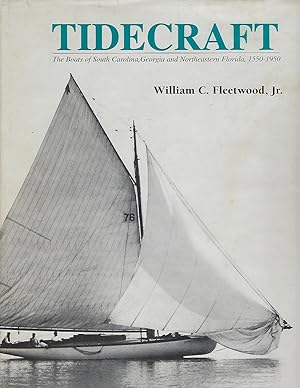
Exploring our Maritime History with Rusty Fleetwood and “Tidecraft”


Image result for early periagua


This article originally appeared in the December 2019 Southern Tides Magazine.

Anyone who knows me has surely heard me gush about Buddy Sullivan over the last year or so. Mr. Sullivan is an incredibly prolific writer with a huge body of work covering the history of coastal Georgia. His primary focus is on the areas around Darien, but in the course of telling those stories he includes fascinating details about places all up and down the coast.

I conducted a tour last year for kids from the Oglethorpe Charter School in Savannah, and overheard their teacher - Ben Wells - mention that Skidaway Narrows wasn’t the path of the Intracoastal Waterway until 1905. This piqued my curiosity, so I asked Ben about his favorite reference for maritime history in the low country. He pointed me to “A Georgia Tidewater Companion” by Buddy Sullivan. It’s a great resource for anyone interested in the past of this place. And in the vein of “one thing leads to another” Mr. Sullivan, with a reference in one of his notes, led me to the most amazing boat book I have ever seen, “Tidecraft” by William [Rusty] Fleetwood. 

If you are at all interested in boats and boating between Georgetown in South Carolina and St. Augustine in Florida, you must get your hands on a copy of Tidecraft. Live Oak Library has them as does Amazon.

As Fleetwood explains; the creeks, rivers, and sounds upon which so many of us play, in boats that are little more than toys, were once the best and most efficient way of getting large numbers of people and countless tons of “goods” from one place to another. The rivers, and the boats upon them, were matters of life and death. They enabled incredible wealth to be accumulated by a fortunate few, aided and abetted a subsistence living for many, and also helped the most unspeakably cruel acts to be perpetrated upon slaves from the west of Africa.

It’s all there in “Tidecraft,” all four hundred years of it. (story continues below)

Coming soon! The Savannah Boathouse Marina
will be your point of embarkation for Daufuskie, Tybee, 
Wassaw, and other points on the
Prohibition Coast. We will be your best way on the water!
Call 912 657-5222 for more info.


Our region served as ground-zero for centuries of desperate, bloody conflict between the world’s great powers – Spain, France, and England. And also of course, the Native Americans who were already here when the Europeans arrived on scene. Greed, avarice, and murder in the name of God were in full swing all across the last four hundred years of low country history, and Fleetwood paints vivid portraits of the drama with words and images gleaned from all over the world. He connects the dots between Barbados and Bermuda and Charleston and Savannah. 

It’s a hell of a story.

A few months back I wrote about Causton Bluff, and Mr. Causton becomes much more real in “Tidecraft.” He designed a flat-bottomed cargo craft derided by Von Reck around 1736, as being “… so heavy and so unsuitable for the Savannah River … the prow is not sharp, so that it stops the water. The oars and rudder avail nothing … “

While the typical river craft that had to be rowed upriver against a steady downstream current was narrow and streamlined [and often made from a dugout tree trunk], I think Causton designed his broad, flat-bottomed boat for a different environment and several times the payload. Causton Bluff is on a tidal river and the tidal creeks and rivers flow where you want to go twice a day.

Imagine trying to get into the head of someone who lived three centuries ago to understand what they were thinking. That’s what happens in “Tidecraft.” As well, much is brought to light that has been largely forgotten – for instance - there was a time when a skiff was an “esquiffe,” a sloop was a “shallop” or “chalupa” depending on where it was made, and a frigate was a “fragata.” There was a Carolina Skiff long before fiberglass was invented. It was built cheaply and for work, it was the truck of the waters, and it was known as a “periagua.” 

The entire maritime world is much more connected than one might imagine, and “Tidecraft” gathers up many of the threads and traces them from today's boats to their distant beginnings. I hope you enjoy the journey.

Thanks, Rusty Fleetwood. It’s a great book.

Wednesday, January 1, 2020

Rum Runners!


Savannah is world-famous for her history, her architecture, and her “go-cup” law – which encourages visitors to stroll the streets drink in hand. While almost every other city in America tries to keep consumption undercover, here in Savannah folks drink out in the open. In broad daylight.

Savannah mixed with hard-liquor before, during, and after the Trustees enacted their prohibition on rum.  The later loosening of their restriction was seen as a way to help the Salzburgers at New Ebenezer and other timber-rich Georgians sell lumber in the West Indies.  The timber-merchants needed a market for their products; the planters at Barbados needed lumber as they had cleared the island to grow sugar cane. The logical way for Barbadians to pay for this lumber was with molasses or the rum which was made from it.

As the decades unwound, the Baptists living in rural Georgia wanted to go “dry,” but Savannah was mighty thirsty.  Indeed, when the state of Georgia outlawed spirits in 1908 - 12 years before the 19th Amendment banned the production and sale of alcohol nationwide – Savannah and Chatham County considered seceding from the state and creating a separate Sovereign State of Chatham!

“When seceding was unsuccessful, Savannah became the unofficial headquarters for illegal imbibing … ‘Savannah’s location was perfect for moonshining, rum-running, and receiving bootleg. Moonshiners would make the bootleg liquor in the marshes, where it was easy to hide the stills, then they would run it through the narrow waterways out to the ocean and make a run for the international water line, about 3 miles out. They would also make pick-ups in international waters and then rush them back to waiting cars in the marsh.’ Al Capone looked to Savannah garage owner Sherman ‘Moose’ Helmey to make his rum-running cars, adding secret compartments and adjusting the suspension to make the car appear to be running light with a full load.” From Bootleggers and Bourbon at talesofthecocktail.com.

As Rusty Fleetwood pointed out in “Tidecraft,” our creeks, rivers and sounds are now playgrounds, but once they were a matter of life and death. While it might have been all oysters, shrimp and crabs during the day, at night it was boatloads of booze running our creeks.

On her fishing-business website, Captain Judy Helmey writes, “My father was Mr. Sherman Helmey, owner and operator of ‘Helmey's Garage.’  His nickname at the time was ‘Moose.’ During this time Daddy allegedly worked with ‘Big Al Capone.’ … My father's garage sold and repaired automobiles.  In fact, my father was known for his great mechanical ways.  I was told that he could take a regular truck or automobile and install secret compartments in which to transport ‘said Liquor or shipments of sorts.’  His expertise came in handy because after loading the car or truck down with a shipment it never showed. According to sources my father tampered with the springs making them hold a lot more.“ From missjudycharters.com

The demand for spirits spanned the socioeconomic spectrum. Whether rich or poor – everyone wanted a drink. Common folk imbibed at Speakeasies and locker-bars; the upper crust poured in their parlors. (story continues below)

Today's Rum Runners run to Gilligan's Beverage Center on
Wilmington Island. Great spirits, a world of wine, and cold beverages to boot.
11 Wilmington Village Way, 912 897-2337 Ask for Chris!


In her book “Island Memories,” Marianne Heimes recounted an interview with one of Henry Walthour’s daughters in 2002.  Mr. Walthour was a wealthy Savannah cotton-broker who owned much of the south end of Wilmington Island in the early 1900s. He was a major partner and developer of the landmark General Oglethorpe Hotel, with its Olympic pool and championship golf course. He also had a large home on the Wilmington River with a dock and dock house.

Heimes wrote, “Although this was during Prohibition, Henry Walthour managed to smuggle whiskey back after stays at the family’s Quebec home. Combined with the local white lightning the whiskey made a fine Chatham Artillery Punch that packed quite a wallop.”

The wealthy weren’t inconvenienced by Prohibition and according to legend and lore, neither were the poor. Local stores sold big bags of sugar, and it wasn’t going in coffee. Sugar was used in isolated island stills to make moonshine. The fact that Walthour owned a dock would have made it easy for this moonshine to be delivered by boat under the cover of darkness; yet another example of our creeks and rivers driving our economic engine. 

In "Once Upon an Island" Elizabeth Carpenter Piechocinski writes, "All people in Georgia are divided into two classes, those who have a little still and those who still have a little ... The irregular coastline and marshes with their winding, lonely waterways were ideal for smuggling bootleg whiskey into the state. Moonless night brought the sound of speedboats moving surreptitiously through the water off Wilmington, Tybee, Whitemarsh, and Skidaway ... These swiftly moving crafts were used to unload contraband liquor from vessels outside the three mile limit ... "

While listening to a program on GPB radio, I heard a reference to “The Savannah Four” during a discussion of Prohibition; and the men and women who worked for and against it. I love it when a national story has roots that lead here, so I investigated.

Again, from Bootleggers and Bourbon, “Capone wasn’t the only one with the entrepreneurial spirit – ‘The Savannah Four’ are possibly the most infamous bootlegging ring, made up of Fred-Senior, William, Carl, and Fred-Junior Haar. They sold bootleg liquor from their grocery store during statewide Prohibition; National Prohibition made them even more successful. They controlled a fleet of ships that ran loads of booze from Scotland, France, Cuba, and the Bahamas; once shipments were brought ashore they were broken down and run by road, typically in trucks, disguised as potatoes, or in faux oil tankers.”

The Haar men must have been tough characters. There is an interesting anecdote referring to them in "Once Upon an Island." In the story, J.D. Powell, who owned the Desoto Hotel and the Savannah Beach Club, lost big in a poker game and owed money to some Mafia men from up north. Mr. Powell's agent took the winners out in a boat at low tide to look at some 'salt meadow,' and tricked them into accepting 6000 acres of salt marsh as payment in full for the debt. The only thing that kept them from coming back and making trouble was the 'Haar boys on Tybee Island,' who the Mafia were afraid of. 


That must have been an exciting time to be a small-boat captain, when a single run from the ship offshore might buy the boat! (story continues below)

Spectrum Printing: For all your printing, promotional, and apparel needs.
Call 912 897-7228 or message Kim@spectrumsav.com. This is a locally
owned small business, supporting them makes our community stronger.
Co-owner Michele Thompson supports the Save Randy Davis Project
and many other local charitable efforts.
spectrumprintingandmarketing.com


Imagine yourself in an unlit bateau, skiff, or flat; loaded deep with boxes of hooch and gliding along Freedom Creek after pushing off from the still on Skidaway.  You slide under a moonless night with a muffled motor. You quietly navigate the twists, shallows and rakes to reach a meeting place on a dry riverbank or a rich man’s dock.  With no talk other than a quiet challenge and response, the cargo is moved from boat bottom to back seat and trunk, then a stack of cash is passed from hand to hand.  With a whispered “Good luck; see you next time,” you shove off the bank and into the creek. The car rumbles into the night, and Georgia’s thirst is slaked again - the law notwithstanding. As it was in 1733, so it was during state and federal dry spells, and so it is today: Folks are going to have their libations.

Enjoy that go-cup.

Tuesday, September 17, 2019

Time for Refresher Training? Boat U.S. Makes It Easy And Free!


We will be visiting our son and grandson in Maryland soon and as Freedom Boat Club members, we decided to take advantage of a reciprocal reservation for a Freedom Boat in Baltimore. On the FBC reservation page, it's noted that boaters in Maryland must possess a state-specific boater education card. A "badge" if you will. While Maryland doesn't require this training for anyone born before July 1972, that tidbit isn't mentioned on the FBC reservation page. [If you will be boating in the Washington DC area, there is another course required in order to reserve a boat from Baltimore's FBC franchise]

 My first thought was, "Wait a minute! I am a United States Coast Guard licensed master with a 50 ton inland credential, I don't need no stinkin' badges!" Then I considered how disappointed my son and grandson would be if we showed up at the dock and they wouldn't give us the boat we reserved. I googled Maryland-specific boater safety training and several options appeared in the search results, with typical charges slightly less than $50 dollars.

Then I did some more searching and stumbled across the Boat US Foundation eLearning page.

I like Boat U.S. I was a member for over a decade when I had my boat at Hogan's Marina and needing a tow was always a possibility. Now, as a Freedom Boat Club member the tow-coverage is included in my membership.  I contract-instruct for Boat U.S. during the "Women Making Waves" events at the Savannah FBC franchise a couple of times each year, and it's a lot of fun. So I thought, what the heck, why not just take the course, consider it a refresher, and get the certificate.

The online training is - mostly - quite good. Animations and videos illustrate the subject matter. As an EMS helicopter pilot for 17 years, I took a whole lot of online training courses: Aviation, OSHA, and Emergency Incident Response to name a few, and I 've seen the good, bad, and ugly of online training. I rate this training as some of the best I've seen.

The Boat U.S. course has a few mistakes.  But they include a conduit for feedback and corrective remarks.

There is conflicting information about Type III M.S.D.s - do they have a Y valve or don't they? And there are repeated references to "long" blasts on a ship's horn. As any graduate of Sea School knows, there is no such thing as a "long" blast. There are short blasts - about one second - and "prolonged" blasts lasting from four to six seconds. Having said that, it's good training and a good review for any licensed mariner or a recreational boater.  I got a big cheesy certificate to frame or file and a wallet-sized cutout to laminate and hang from one of my old military badge carriers around my neck.

I got my stinkin' badge after all.


In case you are wondering if YOU might benefit from this free training for your state, the answer is probably YES. The problem with memory and knowledge is that the things we learned long ago don't say goodbye as they exit our memory.

One of the jobs of a United States Army Instructor Pilot is to help the unit aviators with an organized system of study and review.  Even for someone who might not be required to take them due to age or having taken them years ago, the free Boat U.S. courses are a great way to refresh and review.

Do you remember the criteria for a 24' boat to need a fire-extinguisher - or not? What if the boat is 27'? What are the number and type of extinguishers required? Do you remember what a type-four flotation device is used for? Is there a type of PFD with a number larger than four? If so, can a thirteen-year-old wear it? Do you know how far away from a military vessel you need to stay? How fast you can travel in the vicinity of a large commercial vessel? What is a Type B fire using for fuel? What will a Type B fire often create? These are the bit's of information that go away over time and with lack of use.

You might not be required to take the free Boat U.S. boater-safety course, but you will be a better and safer boater for taking it.

Have fun out there!


Sunday, September 1, 2019

Do You Know Your Knots?


"The term knot dates from the 17th century, when sailors measured the speed of their ship by using a device called a 'common log.'This device was a coil of rope with uniformly spaced knots, attached to a piece of wood shaped like a slice of pie. The piece of wood was lowered from the back of the ship and allowed to float behind it. The line was allowed to pay out freely from the coil as the piece of wood fell behind the ship for a specific amount of time. When the specified time had passed, the line was pulled in and the number of knots on the rope between the ship and the wood were counted. The speed of the ship was said to be the number of knots counted (Bowditch, 1984).

From "Master And Commander" by Patrick O' Brian, page 100...

"... Mowett heaved the log, waited for the red tag to go astern and called 'TURN.'
'STOP!' cried the quartermaster twenty eight seconds later, with the little sand-glass close to his eye.
Mowett nipped the line almost exactly at the third knot, jerked out the peg and walked across to chalk 'three knots' on the log-board." (story continues below)

Would you like one-on-one practical boating instruction?
Does approaching a dock make you uneasy?
No worries! Let Captain Dan Foulds put you at ease
and increase your skill and confidence. Classroom
and online training are great! But nothing replaces
having your hands on the helm.
Call 912 657-5222 for more info.


Knowing the vessels speed and course allowed the navigator to complete  Ded(uctive) reckoning (aka dead reckoning) of the ships position since the last known position.

Travelling at one knot for one hour leaves you one nautical mile from where you started. A nautical mile is equal to one minute of latitude, or one sixtieth of a degree of lattitude. This doesn't work for longitude as lines of longitude converge at the poles and are therefore unequally spaced with changes in lattitude. A nautical mile is equal to 1.15 statute miles (land miles).

Now that wasn't too knotty was it?

When Fog Forms...

 This is the time of year when fog forms on the waters. Any significant difference between air and water temps makes fog likely.  So let...